An interesting TikTok conversation from India reminds us that modesty, fashion and respect have more in common than we sometimes realise.
Singapore weather is not exactly famous for being kind to anyone wearing layers. One minute, you are standing under the afternoon sun waiting for a bus. The next, you are inside an MRT carriage with air conditioning that feels like winter in Melbourne.
And somewhere between work, shopping, family gatherings and catching up with friends, a Muslimah is also figuring out what to wear. Something modest. Something presentable. Something comfortable. And preferably something that does not turn her into a walking sauna.
But beyond Singapore’s unpredictable indoor temperatures and reliably humid outdoors, there is an interesting conversation worth exploring.
A Young Woman Asked an Interesting Question
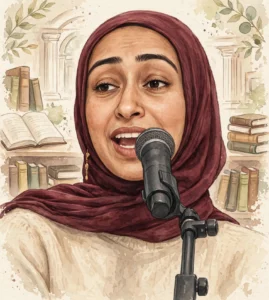
A TikTok video circulating from India features a discussion about women’s clothing. A younger woman questions why women should cover themselves or wear a shawl when men should simply learn to look at women respectfully.
It is a question many women can relate to. The older woman responding takes an interesting approach. Instead of concentrating only on modern fashion, she looks towards India’s history and the way clothing has represented dignity and social standing.
She also points to judges, surgeons and political leaders, whose professional attire often communicates authority and responsibility. It is an observation that invites reflection rather than an argument about who is right.
Watch the original TikTok discussion.
When Covering Was Once a Privilege
There is a remarkable chapter in India’s history that many of us may not know. In nineteenth century Travancore, now part of Kerala, women from certain oppressed caste communities faced restrictions on covering their upper bodies in ways associated with higher social groups.
These women eventually resisted the restrictions through protests that became associated with the Channar Revolt. Imagine that. Something as ordinary as choosing what to wear was once part of a much larger struggle for dignity and equality.
The discussion also recalls a historical tax known as Mulakkaram, commonly translated as breast tax. Historians differ on its exact purpose and whether it was specifically connected to covering the body. The historical clothing restrictions, however, are well documented.
What makes this history interesting is how differently clothing has been understood across generations. Something that was once restricted became a matter of personal freedom, cultural identity and religious expression. And today, we have entire fashion industries helping women decide how they want to present themselves. Times certainly change.
Why Does a Judge’s Robe Make a Difference?
Think about the last time you saw a judge entering a courtroom. The robes, the formality and the setting immediately communicate a sense of responsibility. Similarly, when we see surgeons in their professional attire or leaders dressed for an official occasion, we recognise the roles they represent.
Of course, a surgeon’s clothing also serves practical hygiene and safety purposes. And a judge’s authority comes from the office, not simply the robe. Still, clothing has a language of its own. It can communicate confidence, professionalism, personality, culture and faith.
And that brings us to something familiar to many Muslim women. A hijab, a loose dress or an elegantly styled modest outfit can be part of how a Muslimah expresses her identity. Not because clothing automatically makes someone more respectable than another person, but because how we dress can reflect something about what matters to us.
Islam’s Perspective Is Worth Remembering
Islam introduced guidance on modesty many centuries ago. Interestingly, the Quran addresses men before women in this discussion.
In Surah An Nur, verse 30, believing men are instructed to lower their gaze and guard their chastity. The following verse 31 addresses believing women, including guidance on modesty and covering. And Surah Al Ahzab, verse 59 refers to believing women drawing their outer garments around themselves so that they may be recognised and not harmed.
These verses remain important in Islamic teachings on dress and personal conduct. The message is not that men can behave however they please while women carry all the responsibility. Both have responsibilities.
For a Muslimah, dressing modestly can therefore be more than following a fashion trend or meeting society’s expectations. It can be a quiet expression of faith. And importantly, respecting modesty should never mean disrespecting another woman whose clothing choices are different.
The Singapore Muslimah Has Her Own Challenges
Now comes the practical side. A Singapore Muslimah may be a university student, a corporate professional, an entrepreneur, a healthcare worker, a mother or an enthusiastic traveller. Sometimes she is several of these in one day.
She wants clothing suitable for her workplace, comfortable for commuting, practical for moving around and appropriate for her personal religious values. All while dealing with Singapore’s humidity.
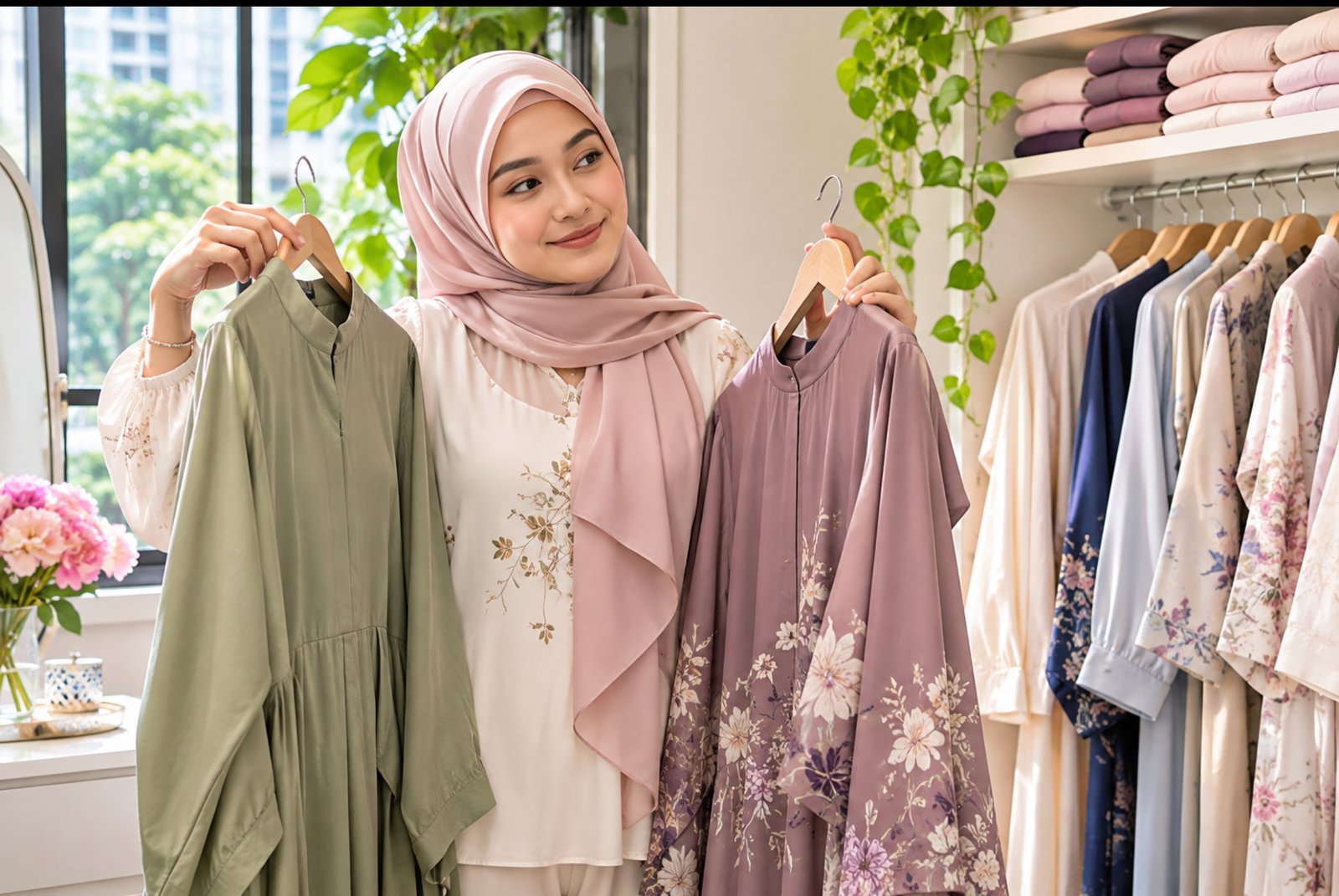
Thankfully, modest fashion today is far from limited to one particular look. There are breathable fabrics, flowing dresses, comfortable trousers, elegant tunics and thoughtfully designed headscarves. A Muslimah can enjoy fashion without feeling that she must compromise her values.
She can travel independently, pursue demanding careers, participate in outdoor activities and enjoy social occasions while choosing clothing that reflects her faith.
Of course, different activities bring practical considerations. A woman working in healthcare may have to consider hygiene and safety requirements. Someone going hiking needs comfortable, suitable attire. A traveller visiting colder countries will dress differently from someone exploring sunny Singapore. Modesty does not have to mean ignoring the realities of everyday life.
And nobody should underestimate the creativity required to look presentable after a humid afternoon walk from the MRT station.
Perhaps It Is About More Than Clothing
The TikTok discussion begins with a question about why women should cover themselves. But perhaps the more interesting question is what our clothing means to us.
For one woman, it may be an expression of faith. For another, a reflection of culture or personal style. For a professional, it may communicate the responsibility of her role. These meanings are not necessarily in competition.
A Muslimah can be confident, ambitious, fashionable, independent and modest at the same time. She does not need to choose between having a personality and having principles.
And while clothing can influence first impressions, genuine respect ultimately comes from how we treat one another.
A woman is worthy of respect regardless of what she wears. For a Muslimah, modest dressing can simply be one meaningful way of expressing the faith and values she carries with her.
Perhaps that is a pleasant thought to take away from this discussion. Modesty does not have to make life smaller. It can simply be part of how a woman confidently makes her way through a very big world. Even when that world happens to be 33 degrees Celsius.
A Little Thought for Our Readers
Do you think modest fashion has become easier for Singapore Muslimahs today, or do work, travel and our tropical weather still make it challenging? We would love to hear your experiences in the comments.
Further reading: The history of Travancore’s clothing restrictions and a historian’s discussion of the disputed breast tax interpretation.
Editorial note: The TikTok discussion is paraphrased from an account of the conversation rather than a verified full transcript.