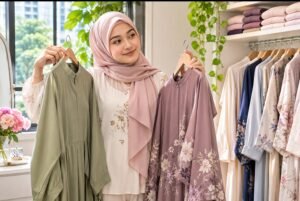

Conscious style for Singapore weather and Singapore life
Sustainable modest fashion can sound abstract: faraway factories, unfamiliar fabrics, and expensive labels. In Singapore, it can be much more concrete. It is the breathable dress that survives a humid MRT ride and a strongly air conditioned office. It is the hijab that stays neat from morning prayer to evening family dinner. It is the small flat wardrobe where every piece earns its place, and where a well loved item is repaired, shared or passed on rather than thrown away.
The pleasure of Allah can guide how we dress and how we buy. Gratitude for what we own, moderation in what we buy, honesty about where clothes come from, and care for the people who make them are all part of conscious style. This guide reframes generic sustainable fashion advice for Singapore life, with humidity, sudden rain, small spaces, multicultural neighbours and Hari Raya, Ramadan and National Day rhythms in view.
Start with what you already own
The most sustainable wardrobe is the one you already have. Before buying anything new, look at your current clothes with fresh eyes. Which pieces do you reach for again and again. Which pieces feel good in humid heat, on long walks, and in air conditioned rooms. Which pieces mix well with each other, and which pieces sit unworn because they do not fit, do not breathe, or do not suit your daily life.
Try a simple wardrobe review in your small flat. Take everything out, sort by how often you wear it, and notice patterns. You may find you already own a capsule wardrobe: a few breathable tops, a few modest skirts or trousers, a few hijabs in versatile colours, and one or two outer layers for rain and cool offices. Keep what works, repair what is slightly damaged, and pass on what no longer suits you through family, friends or a donation route that you trust. A wardrobe that is smaller and better loved often feels more stylish than a large wardrobe full of almost right pieces.
Choose fabrics and cuts for heat, rain and prayer
Singapore weather is a practical teacher. Choose fabrics that breathe in heat, dry reasonably quickly after sudden rain, and still give modest coverage without clinging. Light cotton, linen blends and other breathable fabrics often serve well, while heavy, non breathable layers can leave you uncomfortable by midday. Choose cuts that allow movement for walking, sitting, praying and caring for children: longer hems that do not ride up, sleeves that stay in place, and hijab styles that remain secure in wind and on busy streets.
Try new pieces at home first, on a real day: an MRT ride, a hawker centre lunch, a walk in humid heat, a prayer pause, and time in an air conditioned room. Notice how the fabric feels after hours, not only in a shop mirror. Check care labels too. Clothes that wash well, dry well in Singapore humidity, and need little ironing will be worn far more often than delicate pieces that demand special care. Practicality is not the enemy of style. It is what lets style last through a real Singapore day.
Buy less, buy better, and ask gentle questions
Buying less is the simplest sustainable habit, and it is also a faith habit. Before a purchase, pause and ask: do I need this, do I already own something similar, will I wear it often, does it suit my daily life and my values. A short pause often prevents an impulse buy that would sit unworn. When you do buy, choose quality over quantity where you can: good stitching, a comfortable fit, a colour that mixes with what you own, and a fabric that suits Singapore weather.
Ask gentle questions about where clothes come from and how they are made, especially when a seller makes strong ethical claims. You do not need to interrogate every shopkeeper, but a curious, respectful question about materials, care and durability is reasonable. Avoid buying from sources that make vague sustainability claims with no clear information. Check labels, care instructions and return arrangements before you buy, and keep receipts where useful. Conscious shopping is not about perfection. It is about paying attention, one purchase at a time.
Hari Raya, weddings and special occasions without excess
Special occasions in Singapore often bring pressure to buy new outfits: Hari Raya visiting, weddings, family celebrations, National Day gatherings. A sustainable approach does not mean looking plain on special days. It means planning a little earlier and using what you own more creatively. A well loved dress with a new hijab, a different accessory, or a fresh colour combination can feel entirely new. Borrowing from a sister, swapping with a friend, or restyling a family piece can honour both celebration and moderation.
If you do buy for a special occasion, choose a piece you can wear again on ordinary days, not only once. A versatile dress, a good outer layer, or a hijab in a colour that suits many outfits will serve you long after the celebration. Care for special pieces well: store them clean and dry in a small flat, protect them from humidity, and repair small damage promptly. A special outfit that lasts for years, worn with joy on many occasions, is a beautiful example of sustainable style.
Care, repair and passing on
Clothing care is where sustainability becomes daily habit. Wash in cooler water where suitable, dry in shade and breeze where possible, and avoid overwashing items that have only been worn briefly. Learn a few simple repairs: a loose button, a small hem, a snag caught early. A small sewing kit, kept in a drawer, can extend the life of many favourite pieces. If a repair is beyond your skill, a neighbourhood tailor can often help, and supporting local tailoring is itself a sustainable choice.
Passing on clothes is another Singapore friendly habit. In multigenerational families, clothes often move from sister to sister, mother to daughter, friend to friend. Pass on clean, wearable items with honesty about their condition, and accept passed on items with gratitude. This sharing reduces waste, saves money, and strengthens community. It also teaches children a valuable lesson: clothes are to be cared for, shared and valued, not used once and discarded. In a multicultural city, sharing styles across cultures, with respect for modesty and personal taste, can also spark joyful conversations about heritage, fabric and design.
A wardrobe that reflects faith and daily life
A sustainable modest wardrobe, built for Singapore, does not need to be large, expensive or perfect. It needs to be honest: honest about what you wear, what you need, what you can afford, and what you value. It needs to breathe in humid heat, cope with sudden rain, sit comfortably through prayer, and move easily between home, work, mosque, hawker centre and family gatherings in Tampines, Jurong, Woodlands, Punggol, Bedok, Toa Payoh, Yishun or Ang Mo Kio.
Begin with one small step this week: review one drawer, repair one item, pass on one piece, or pause before one purchase. Notice how that step feels. Conscious style grows from such small steps, repeated with gratitude. When your wardrobe reflects your faith, your climate and your real daily life, getting dressed becomes simpler, calmer and more joyful, and that simplicity is itself a beautiful form of sustainability.