
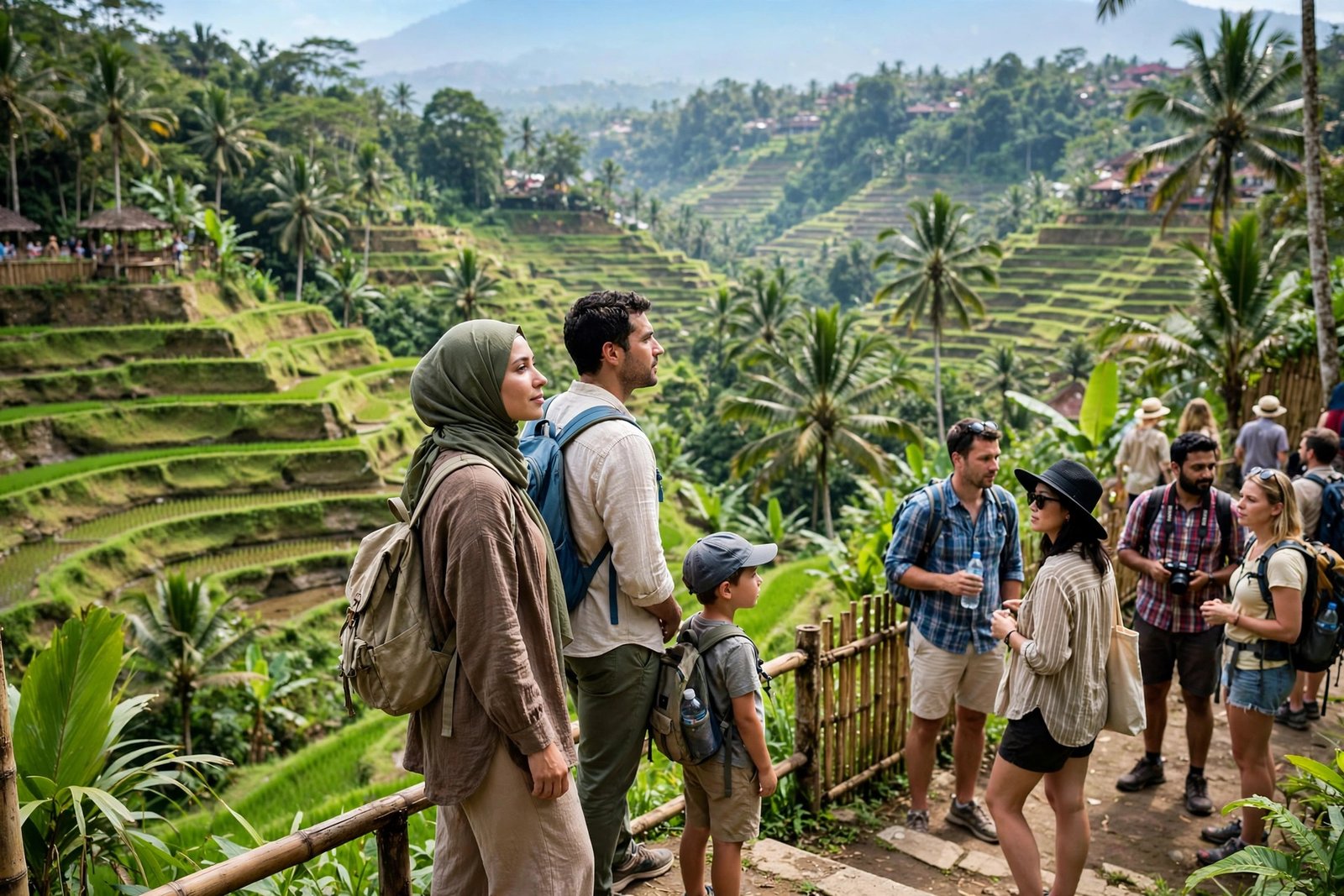
Bali from Singapore feels close enough for a short school holiday break, a long weekend with family, or a quiet reset after busy weeks of work, MRT commutes, and life in a small flat. The flight is short, the weather is warm like home, and the scenery changes quickly from HDB blocks and expressways to rice fields, beaches, and village roads. For Muslim travellers, the trip works best when the same care we use at home in Singapore is carried across the journey. We check halal food at a hawker centre or a kopitiam here, we look for a prayer room in a mall here, and we plan our day around prayer times here. In Bali, that same habit makes the holiday calm instead of stressful.
Starting at home in Singapore
A good Bali trip often starts days before departure, in the rhythm of home life. Packing in a Tampines, Jurong, Woodlands, Punggol, or Bedok flat usually means a shared family discussion about luggage space, modest clothes that breathe, and what each person really needs. Pack light, breathable clothes for heat and humidity, comfortable shoes for walking on uneven paths, sun protection, a prayer mat or prayer garments, and a small day bag for water, tissues, and snacks. Keep passports, flight details, and the address of your stay easy to reach, just as you would keep your travel card and phone ready for a morning MRT ride. At Changi Airport, allow generous time so the start feels unhurried, with time for a drink, a toilet stop, and a quiet moment before boarding.
Choosing a calm stay
Where you stay shapes how easy prayer and halal food will feel each day. Some parts of Bali are busy late into the night, while other areas are quieter, more family friendly, and better suited to rest. Look for a stay that is clear about halal breakfast options, nearby mosques or prayer facilities, and a quiet room if you prefer early nights. A hotel, resort, or villa with helpful staff, good transport access, and space for family can make a big difference, especially when grandparents need a lift instead of stairs, or children need a safe place to play. Before you confirm, read recent guest information about location, cleanliness, and staff help, and message the stay directly if you are unsure about halal food or prayer facilities. Ask in plain words, just as you might ask a hawker stallholder in Singapore whether a dish is halal. Clear answers before you travel save awkward questions on arrival.
Eating with confidence
Halal food in Bali needs checking, but it is very doable with the same habits we use in Singapore. At home, many of us look for a halal certificate on display, ask about ingredients when unsure, and choose stalls we trust in a hawker centre or a neighbourhood kopitiam. Use the same approach in Bali. Look for eateries with clear halal signs, Indonesian Muslim eateries, and restaurants that state halal status clearly. Ask staff politely about ingredients and preparation if you are unsure, especially for meat dishes and sauces. If an answer is vague, choose another eatery rather than worrying through the meal. Bali offers many rice, noodle, grilled, soup, and fresh fruit dishes that suit Muslim travellers, and sharing dishes lets everyone try more flavours. Pack snacks for day trips, so you are not hungry while searching for food in an unfamiliar town, much like packing snacks for a long MRT journey or a day out with children during the school holidays.
Prayer as the shape of the day
Prayer planning matters in Bali because prayer times and mosque locations vary by area, just as prayer rooms vary from mall to mall in Singapore. Check prayer times for Bali for each day of your trip, and note the nearest mosque to your stay and to any sightseeing area you plan to visit. Bali has mosques in many towns, but some tourist areas have fewer prayer facilities, so plan ahead. Carry a prayer mat, plan stops for wudhu, and allow time to return to your stay or to a mosque for prayer if needed. A day shaped around prayer feels calmer and more grounded, even on a busy sightseeing day. In Singapore, many of us fit prayer between work meetings, a lunch break at a hawker centre, and an evening at home with family. In Bali, the same pattern works: one main sight in the morning, prayer and lunch, rest in the shade, then a second gentle outing. Children learn from watching adults pause for prayer even on holiday.
Sightseeing and beach days at a gentle pace
Sightseeing in Bali can be enjoyed slowly. Rice terraces, waterfalls, beaches, villages, markets, and cultural performances can all be wonderful, but you do not need to visit them all in one trip. Travel times in Bali can be longer than expected because of traffic and narrow roads, so build in buffers, just as you would allow extra time for a bus ride from Yishun to town during peak hours. When visiting temples or cultural sites, dress modestly, follow dress codes, and follow local guidance about behaviour and photography. Some sites require a sarong or sash, which may be provided at entry. This respect feels familiar to Singaporeans who live among multicultural neighbours, share void deck spaces, and celebrate Hari Raya, National Day, and Ramadan rhythms alongside friends of many backgrounds. For beach days, choose a beach with shade, toilets, food nearby, and lifeguard guidance where available. Wear modest swimwear or modest beach clothes, bring a cover up, use sun protection, drink water, and follow safety flags. Some beaches have strong currents, so check local advice before swimming.
Family rhythms and coming home
Travelling with family in Bali needs the same care as a multigenerational outing in Singapore. Choose transport with seat belts and air conditioning, and agree on a daily plan that suits children and older relatives. Plan rest breaks, toilet stops, and meal times. Keep children in sight in markets and beaches, and keep a meeting point in case the group splits up. Bring a small first aid kit, wet wipes, sun protection, and extra clothes. If someone feels unwell in the heat, rest in shade, drink water, and seek help promptly. Sudden rain can also arrive, just as it does in Singapore, so carry an umbrella or rain jacket. Shopping can be enjoyable if you keep it practical: choose items you will use at home, check sizes for modest clothing, check fabric for hot weather, and check that food gifts are well packed for the flight home. As your trip ends, leave time for packing, prayer, and a calm departure. Enjoy a final halal meal, take a last walk near your stay, and reflect on favourite moments. Returning home to familiar MRT announcements, a kopitiam breakfast, and prayer in your own neighbourhood mosque or surau can feel like part of the blessing of the trip, not just the end of it. Plan well, check before you go, and let the trip be about beauty, family, rest, and gratitude for the blessings of Allah in travel and in homecoming.