
Self care that fits a real Singapore day
Self care advice often imagines a long, quiet morning, a large bathroom, and hours of uninterrupted time. Real Singapore life is different. Many Muslimahs balance work, family, caregiving, study, prayer and community in a small flat, with MRT rides, school runs, hawker meals and sudden rain in between. Self care that only works on a holiday is not very useful. Self care that works in ten minutes between tasks, in a small room, on a busy day, is a gift that can actually be used.
The pleasure of Allah is a gentle guide for self care. Care for the body, the mind and the soul is part of faith, not a distraction from it. Prayer, rest, good food, clean water, honest conversation and time in nature are all forms of care when done with intention. This guide reframes generic self care advice for Singapore life, using humid weather, small spaces, multigenerational living and neighbourhood rhythms as the starting point, not as problems to escape.
Prayer as the anchor of the day
For many Muslimahs, prayer already anchors the day, and that anchor can become the heart of self care. Instead of adding a long new routine, try letting prayer pauses do more work. Arrive a few minutes early where you can. Sit quietly after prayer. Drink water slowly. Notice your breathing. Let the pause separate one part of the day from the next, so that work does not bleed endlessly into family time, and family worries do not follow you into sleep.
Skin, hair and body care in humid weather
Singapore humidity changes how self care feels. Skin can feel sticky by midday, hair can frizz after rain, and a routine that works in a cool, dry climate can feel heavy here. Choose light, breathable products, wash gently, and keep routines simple. A short morning routine and a short evening routine, done consistently, usually serve you better than a long routine that is abandoned after a week.
Check halal status with calm confidence. Look for clear halal certification where it is displayed, read ingredient lists for items you wish to avoid, and ask politely when a label is unclear. Keep your routine practical for small bathrooms and shared spaces: a few trusted items, stored neatly, used daily, replaced before they run out. Protect skin from strong sun on outdoor walks, drink water regularly, and seek shade during the hottest part of the day. After rain, dry hair gently rather than rubbing harshly, and give curls or waves time to settle. Care that respects your body and your climate will feel good, not forced.
Rest in a small flat with many people
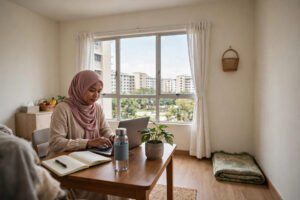
Rest is often the hardest part of self care in a multigenerational home. There may be little private space, and someone always needs something. Rest does not always mean a closed door and silence. It can mean a quiet corner with a book, a short walk around the block after dinner, a cup of tea in the void deck while children play nearby, or an early night with the phone on silent. Name your rest clearly to family where you can: a short rest now often means a kinder, calmer presence later.
Sleep deserves special care. Keep a simple wind down routine: dim lights, a short prayer or reflection, a glass of water, and screens put aside a little before bed. If sleep is regularly difficult, or if low mood, anxiety or exhaustion persist, consider speaking with a trusted professional or community support service. Self care includes asking for help, and asking early is a strength, not a failure. Friends, family and faith community can offer listening, practical help and encouragement, and professional help can offer tools that a routine alone cannot.
Food, movement and gentle energy
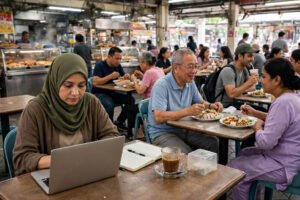
Self care through food in Singapore can be joyful and simple. Hawker centres and kopitiams offer halal choices that are familiar and affordable, and home cooking offers control over ingredients and portions. Balance rich festive food with lighter home meals, drink water in humid heat, and keep fruit and simple snacks handy for busy days. During Ramadan, plan suhoor and iftar with care, so that energy lasts through the day and the night prayers feel sustainable rather than exhausting.
Movement can be gentle and woven into daily life. A walk to the MRT station, a stroll in a neighbourhood park in Punggol or Bedok, a slow walk after dinner in Toa Payoh or Ang Mo Kio, a short home stretch before prayer, all count. Choose modest, breathable clothing that lets you move freely in heat and in air conditioned spaces. If you enjoy group activity, a women only class or a walk with sisters can combine movement, friendship and faith in one outing. The goal is not perfection or a new body. It is steady energy, a clearer mind, and a body that feels cared for.
Community, boundaries and kind words
Self care is not only private. It lives in community too. A sister who listens without judgement, a neighbour who shares food, a friend who checks in after a hard week, all are forms of care. Build these connections slowly: a regular kopitiam meet up, a shared walk, a message during Hari Raya, a prayer together at a neighbourhood mosque. In a multicultural city, friendships across cultures also nourish self care, as long as boundaries around faith, food and privacy are respected with warmth on both sides.
Boundaries are part of care as well. Learn to say no kindly when you are tired, overloaded or unwell. A simple, warm refusal protects your energy and your relationships better than an exhausted yes followed by resentment. Keep social media use in check where it feeds comparison or restlessness. Unfollow accounts that leave you feeling inadequate, and follow accounts that leave you feeling calm, inspired and grateful. Words matter too: speak kindly to yourself, especially on hard days, and remember that progress in self care is often quiet and slow, not dramatic.
A small, sustainable routine to begin today
Begin with a routine you can actually keep. Choose one prayer pause to lengthen by a few minutes. Choose one simple skin care step to do daily. Choose one walk, one glass of water, one kind conversation, one early night each week. Write the routine down in a few lines and keep it where you can see it. Review it after a month, not to judge yourself, but to notice what helped and what did not.
Self care for a Singapore Muslimah does not need to look like anyone else’s routine. It can look like prayer in a small flat, tea in a void deck, a walk after rain, a hawker lunch eaten slowly, a phone call with a sister, a quiet moment in a mosque courtyard, and a good night’s sleep before a busy tomorrow. Done with gratitude and intention, these small acts add up to a life that feels cared for, faithful and sustainable, in the very place where you actually live.